


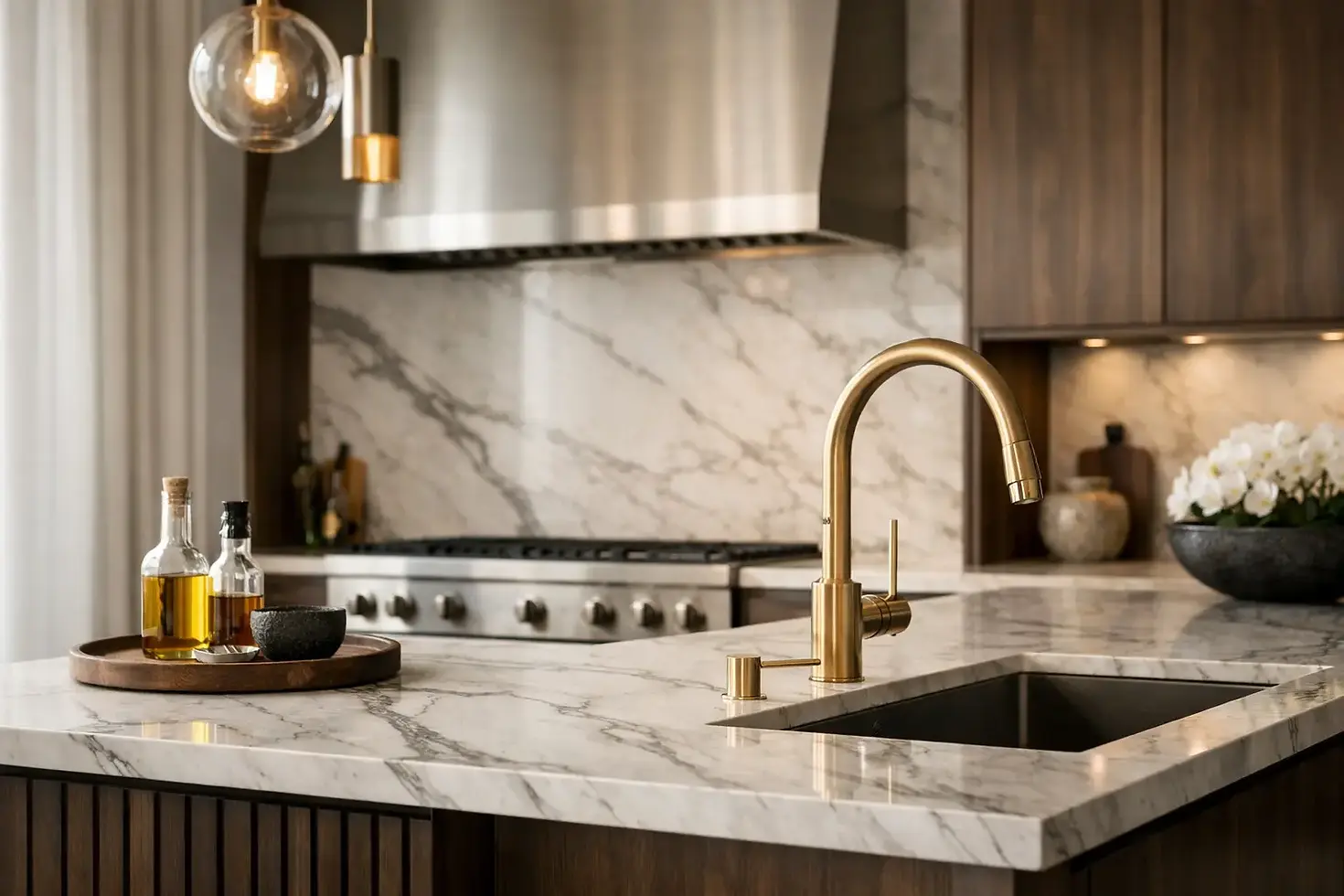
Luxury Kitchen Finishes That Last

A kitchen can look expensive in a photo and still disappoint in daily use. The difference usually comes down to finishes. Luxury kitchen finishes are not simply glossy surfaces or trendy materials. They are the details that hold up to cooking, cleaning, storage, light, and time while still making the room feel calm, polished, and intentional.
For homeowners planning a renovation, this is where design decisions start to matter in a very practical way. A finish has to earn its place. It should complement the architecture of the home, support how the kitchen functions, and maintain its appearance without constant upkeep. That balance is what gives a kitchen a premium feel.
What makes luxury kitchen finishes feel truly high end
The most successful kitchens rarely rely on one dramatic material. Instead, they layer quality in a controlled way. Cabinet surfaces, countertop edges, metal hardware, backsplash texture, paint selection, and even the sheen level of each finish work together. When these elements are chosen with discipline, the room feels elevated.
Luxury is also tied to restraint. A kitchen with three statement stones, two metal tones, and an aggressive cabinet color may look custom, but not necessarily refined. In most homes, the more timeless approach is to create contrast through texture and tone rather than visual noise. Matte cabinetry paired with softly veined stone and a warm metal accent often feels more expensive than a kitchen trying to showcase every feature at once.
Craftsmanship matters just as much as material. A premium quartz slab will not look luxurious if seams are poorly planned. Custom cabinetry will not feel high end if reveals are inconsistent or hardware placement is careless. Finishes are only as strong as the design and installation behind them.
Luxury kitchen finishes for cabinetry
Cabinetry typically occupies the largest visual area in the kitchen, so its finish has an outsized effect on the room. Painted cabinets remain a leading choice for homeowners who want a tailored, designer-led result. The key is choosing a color with depth and a finish that resists wear. Soft whites, warm taupes, muted greens, and natural wood tones tend to age more gracefully than stark trends.
For painted finishes, the sheen matters. High gloss can reflect light dramatically, but it also highlights fingerprints, minor dents, and surface irregularities. In most family kitchens, a satin or low-sheen finish offers a more sophisticated result. It feels softer, hides everyday wear better, and supports a timeless look.
Wood veneer and stained cabinetry bring a different kind of luxury. They add warmth and character that painted cabinets sometimes lack. White oak, walnut, and rift-cut woods remain especially popular because they feel current without looking temporary. The trade-off is that natural wood variation is part of the appeal, so homeowners need to be comfortable with movement in grain and tone.
In many projects, the strongest solution is a combination. Perimeter cabinets in a painted finish with a wood island, or upper cabinetry in a lighter tone with deeper base cabinets, can create contrast without making the kitchen feel busy.
Hardware as a finish, not an afterthought
Cabinet hardware is one of the easiest places to cheapen a beautiful kitchen. It is touched daily, seen at eye level, and closely associated with craftsmanship. Solid brass, quality stainless steel, and well-finished bronze pieces tend to feel more substantial than lightweight alternatives.
The finish should support the larger design direction. Warm brass adds softness and richness, especially against painted cabinetry and natural stone. Black hardware can look sharp and architectural, but it needs to be used carefully. In some kitchens it creates welcome definition. In others, it can feel too stark. Brushed nickel and stainless finishes remain reliable choices for homeowners who want longevity and flexibility.
Countertops that balance beauty and performance
Countertops are often treated as the main luxury statement, and they do carry visual weight. But the best countertop choice depends on how the kitchen is used.
Quartz remains a strong option for many households because it offers a polished look with relatively low maintenance. It works well in busy kitchens, supports clean detailing, and is available in styles that range from subtle to dramatic. Not all quartz looks premium, however. Designs with excessive pattern repetition can appear manufactured. Softer veining and more natural movement usually create a more convincing high-end effect.
Natural stone still has a distinct appeal. Marble is unmatched for elegance, but it demands tolerance for etching and patina. For some homeowners, that aging process is part of the beauty. For others, it quickly becomes a source of frustration. Quartzite can offer a similar visual richness with greater durability, though availability and cost vary.
Edge profiles also influence the final look. An ornate edge can make even an expensive slab feel dated. Clean eased edges, lightly softened square profiles, and modest miters generally support a more current luxury aesthetic. Thickness should be chosen carefully as well. Thicker is not always better. Proportion matters more than scale.
Backsplashes and wall surfaces
A backsplash should do more than fill space between the counter and upper cabinets. It can either support the entire kitchen or interrupt it. In many high-end kitchens, the most effective backsplash is one that continues the countertop material up the wall. This approach feels intentional, quiet, and custom.
Tile still has an important place, especially when texture is needed. Handmade-look ceramics, full-height slab-inspired porcelain, and carefully selected zellige-style tiles can add depth without overwhelming the room. The risk comes when the backsplash becomes too decorative compared to the rest of the kitchen. If the cabinetry and stone already carry strong visual interest, a simpler wall finish is usually the better decision.
Grout color matters more than many homeowners expect. High contrast grout can emphasize pattern, but it can also create visual clutter. A closer tonal match often feels more refined.
The role of metal, lighting, and fixture finishes
Luxury kitchen finishes are not limited to large surfaces. Faucets, pendants, cabinet lighting, and appliance details shape the atmosphere of the room.
A faucet should feel substantial in the hand and visually aligned with the cabinetry hardware. Mixing metals can work, but it should be done with purpose. One dominant metal and one supporting accent is usually enough. Too many competing finishes tend to weaken the design.
Lighting deserves careful coordination. Decorative pendants bring personality, but their finish should connect to nearby materials rather than compete with them. Under-cabinet lighting is equally important, even though it is less visible as an object. It improves function, highlights backsplash texture, and gives premium materials the presence they deserve.
Integrated appliance panels, trim kits, and vent hood detailing also contribute to a luxury impression. These choices are less flashy than a statement faucet, but often more important in creating a cohesive result.
How to choose luxury kitchen finishes for your home
The right finish package depends on the home, not just the trend cycle. A sleek downtown condo may call for flatter cabinet profiles, restrained stone movement, and darker accents. A traditional family home may benefit from warmer wood, softer paint colors, and more classic hardware forms. Luxury feels most convincing when the kitchen belongs to the house.
Lifestyle should guide every decision. Households with young children, frequent cooking routines, or pets often need finishes that are forgiving. That may mean choosing quartz over marble, satin paint over high gloss, or textured flooring over highly polished tile. These are not compromises if they support the way the space actually functions.
Resale matters too, especially for homeowners preparing a property for market. The safest high-end finishes are usually those that look custom without becoming too personal. Neutral cabinetry, quality counters, layered lighting, and durable hardware appeal to a broad range of buyers while still elevating the room.
At Living Home Indoors, this is where a designer-led renovation process makes a measurable difference. Finish selections are stronger when they are considered as part of the full kitchen, not made one sample at a time.
Where luxury kitchen finishes can go wrong
Most finish mistakes happen when homeowners focus on individual products instead of the full composition. A premium faucet cannot rescue low-quality cabinets. A dramatic stone slab can feel out of place if the floor, hardware, and paint all fight for attention. Cost alone does not create elegance.
Another common issue is overcommitting to what is popular at the moment. Trends can be useful as reference points, but kitchens are long-term investments. If a finish is selected only because it is everywhere right now, it may feel dated far sooner than expected.
It also helps to remember that some of the most expensive materials require the most maintenance. That is not a reason to avoid them. It is simply part of making an informed decision. A beautiful kitchen should fit your standards for upkeep, not someone else’s.
The strongest kitchens are built on thoughtful restraint, durable materials, and skilled execution. When finishes are chosen with care, the result is not just a room that looks luxurious on reveal day. It is a kitchen that continues to feel polished, functional, and worth the investment every time you use it.



Comments