


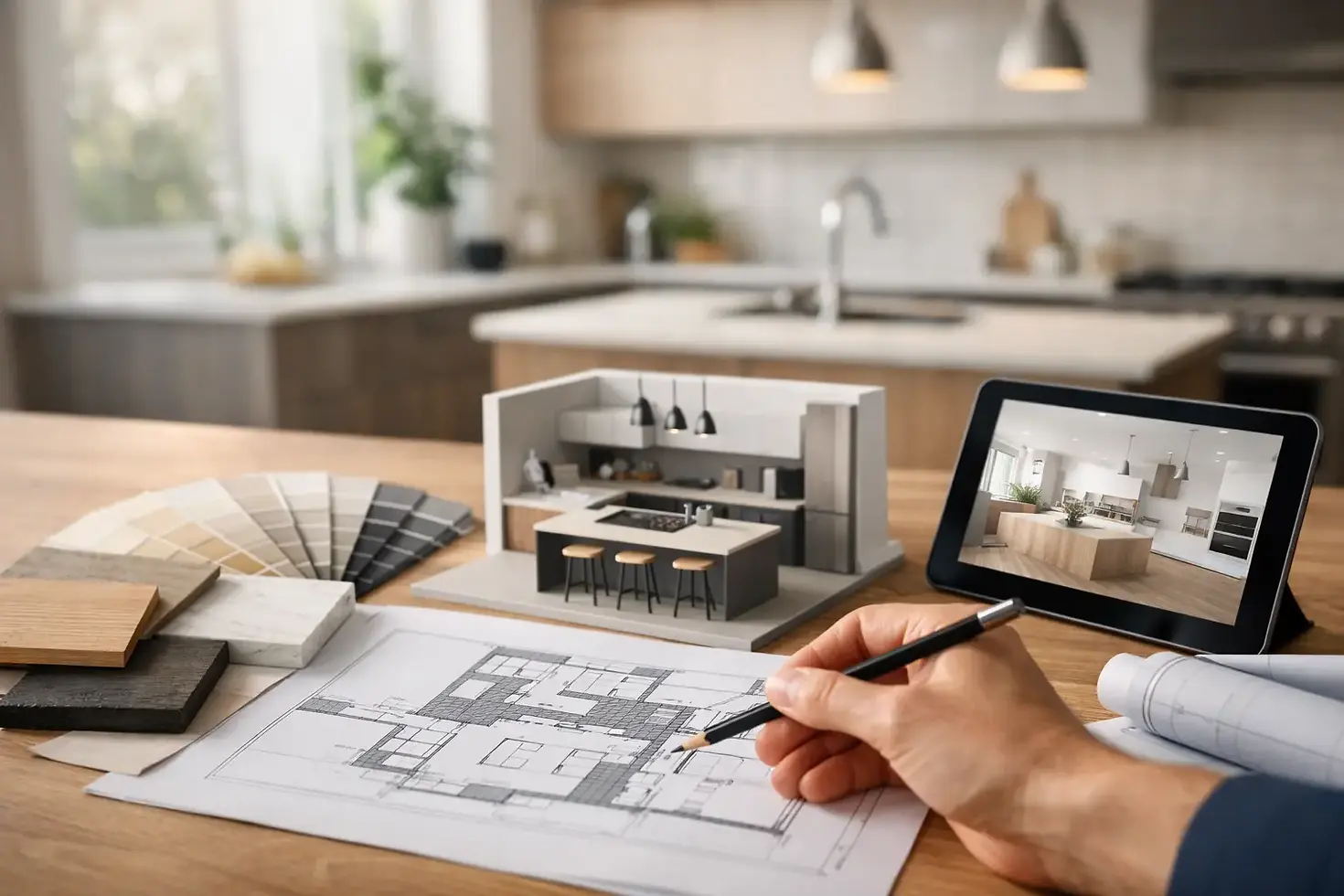
What Is Kitchen Design? A Clear Guide
A kitchen can look impressive in photos and still feel frustrating the moment you start cooking in it. The island is too large, the fridge door blocks traffic, storage is scattered, and the lighting flatters the stone but not the work surface. That is why homeowners ask, what is kitchen design? It is not simply choosing cabinets and countertops. It is the process of planning how a kitchen works, how it looks, and how it supports everyday life.
A well-designed kitchen balances movement, storage, appliances, lighting, materials, and proportion. It should suit the home, the people using it, and the level of investment the homeowner wants to make. In a premium renovation, good kitchen design also protects resale value because buyers notice when a kitchen feels thoughtful, efficient, and built to last.
What Is Kitchen Design, Really?
Kitchen design is the professional planning of a kitchen's layout, function, and visual character. It brings together architecture, interior design, cabinetry, appliances, finishes, and construction details so the final space is practical as well as beautiful.
That definition matters because many homeowners start a renovation by thinking about style first. They may know they want a modern kitchen, shaker doors, quartz counters, or warmer wood tones. Those choices are important, but they come after the deeper design decisions. Before selecting finishes, a designer studies how the kitchen should perform.
The real work of kitchen design includes questions like these: How many people use the space every day? Do they cook often or entertain frequently? Is more pantry storage needed? Should the layout open to the family room, or should it create better separation? Will the kitchen need to support aging in place, resale preparation, or a busy household with children?
When those answers shape the design from the beginning, the result feels natural. Nothing seems forced. The kitchen simply works.
The Core Elements of Kitchen Design
The foundation of kitchen design is layout. This determines where the major zones sit, how traffic moves, and whether the room feels open or crowded. A strong layout considers the relationship between the sink, refrigerator, and cooking area, but it also goes beyond the classic work triangle. Today's kitchens often include multiple cooks, coffee stations, hidden storage, charging areas, and seating, so the plan has to reflect real habits rather than old rules alone.
Storage is equally important. A beautiful kitchen with poor storage becomes cluttered quickly. Good design looks at drawer depth, pantry access, corner solutions, cabinet height, waste and recycling placement, and how close items are to the task they support. Pots belong near the range. Everyday dishes should be easy to reach. Small appliances need a home that does not consume all the counter space.
Lighting is another major factor, and it is often underestimated. Kitchen lighting should not rely on one ceiling fixture or decorative pendants alone. Task lighting at prep areas, ambient lighting for overall visibility, and accent lighting to add warmth all have different jobs. A kitchen can feel high-end largely because the lighting plan was done properly.
Material selection ties function to appearance. Cabinet finishes, counters, backsplashes, flooring, hardware, and paint colors should create a cohesive look, but they also need to hold up to daily wear. Some surfaces are lower maintenance. Some show fingerprints or scratches more easily. Some are better for resale, while others are chosen for a more personal statement. This is where design becomes highly specific to the homeowner.
Why Kitchen Design Is More Than Decoration
Many people assume kitchen design is mostly about style. In reality, decoration is only the visible layer. The more valuable part is problem-solving.
A kitchen designer studies dimensions, clearances, door swings, appliance specifications, ventilation requirements, electrical needs, plumbing locations, and installation details. Even a small miscalculation can affect comfort and cost. An oversized island may look impressive on paper but leave too little room to pass. A poorly placed dishwasher can block movement around the sink. A microwave set at the wrong height can be inconvenient or unsafe.
This is where a design-led renovation has a clear advantage. Instead of making isolated choices, the project is planned as one connected system. The cabinetry works with the appliances. The lighting works with the ceiling plan. The finishes work with the architecture of the home. The result is a kitchen that feels intentional rather than assembled.
What Good Kitchen Design Looks Like in Practice
Good kitchen design is often easiest to recognize by how calm the room feels. Traffic flows without bottlenecks. Prep space sits where it is needed. Storage supports daily routines. The room looks balanced, and the materials feel appropriate to the home.
That does not mean every good kitchen looks the same. For one family, a successful design may include a large island with seating, durable surfaces, and deep drawers for bulk storage. For another, it may mean a more refined layout with integrated appliances, custom cabinetry, and a quieter visual profile. For a homeowner preparing to sell, the right design may focus on broad appeal, timeless finishes, and smart upgrades that improve perceived value.
The common thread is that the kitchen reflects both use and context. It responds to the home instead of fighting it.
What Is Kitchen Design in a Renovation Project?
In a renovation, kitchen design is the stage that turns goals into buildable decisions. It starts with understanding what is not working in the existing kitchen, then translating that into a clear plan.
Sometimes the solution is relatively focused. Better cabinetry, improved storage, new counters, and updated lighting may be enough. In other homes, the design process reveals that walls should move, plumbing should shift, or the entire room should be reconfigured to improve function. This is why budgeting without design can be misleading. Until the layout and scope are defined, it is difficult to know what the project truly requires.
A professional process usually includes site measurements, discussion of priorities, layout development, finish selections, appliance coordination, and preparation for installation. It also involves trade-offs. A larger island may reduce walkway space. Full-height cabinetry may add storage but require different lighting and ventilation planning. Premium materials may elevate the look but need to be balanced against budget.
Thoughtful kitchen design does not ignore these trade-offs. It manages them.
The Value of Designer-Led Planning
Homeowners often feel overwhelmed because a kitchen touches so many decisions at once. Cabinets, countertops, flooring, appliances, plumbing fixtures, tile, paint, hardware, lighting, seating, and construction all have to align. Without a strong plan, projects can drift, budgets can expand, and the finished space may still fall short.
Designer-led planning brings clarity. It helps homeowners prioritize what matters most, avoid expensive mistakes, and make choices that fit both the house and their lifestyle. It also creates continuity between design intent and renovation execution, which is especially important in custom kitchens where details matter.
For homeowners who want one team to guide both the visual direction and the practical build, this approach is especially valuable. At Living Home Indoors, that kind of integrated thinking is central to creating kitchens that are not only attractive on reveal day, but comfortable and functional for years after.
When Kitchen Design Should Prioritize Resale
Not every renovation has the same goal. If a homeowner plans to stay long term, the design can be tailored more closely to personal habits and preferences. If the home may be sold in the near future, kitchen design should be more strategic.
Resale-focused kitchens usually benefit from timeless cabinet styles, durable materials, reliable storage, and a neutral but elevated finish palette. That does not mean the kitchen has to feel bland. It means the design should appeal to a broad range of buyers while still feeling polished and current.
The best resale kitchens also avoid obvious functional flaws. Buyers may forgive a finish they would eventually change. They are less forgiving of a kitchen that feels awkward, dark, or poorly organized.
Why the Best Kitchens Feel Effortless
The most successful kitchens rarely announce how much planning went into them. They simply feel right. The proportions are comfortable. The surfaces are practical. The lighting supports the room at every hour of the day. Storage is where it should be. The style feels current without chasing short-lived trends.
That is the real answer to what is kitchen design. It is the discipline of making hundreds of connected decisions so one of the most important rooms in the home performs beautifully.
If you are thinking about updating your kitchen, start by looking beyond finishes. Ask how the room should function, how you want it to feel, and what a better daily experience would actually look like. The right design begins there.


Comments